

cyanotype and sublimation printing
creating a wearable archival collection of myself

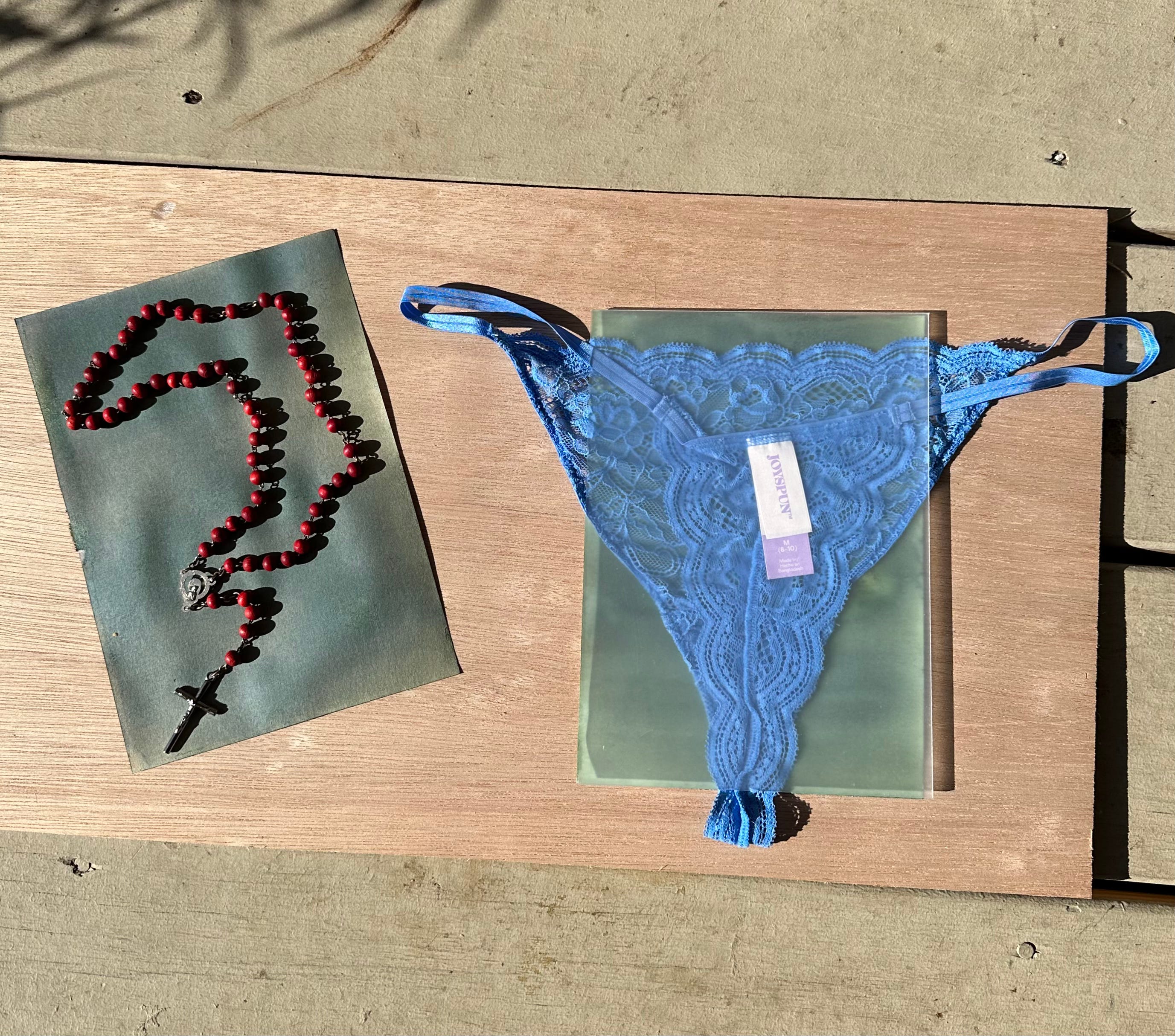
last fall I started messing around with cyanotype printing because I wanted to print an image of my boyfriends hands on my tits onto a shirt I could wear. cyanotyping is an old (170 years) photographic printing process where you use the sun to transfer images to a surface: paper, fabric, wood, really whatever you can get the chemical solution on. the word “cyan” comes from the Greek, “dark blue substance.”
it was invented by John Herschel, an astronomer and scientist, but he only used it for reproducing notes. It was his friend, Anna Atkins, who used the cyanotype process in 1843 to make a photo album of algae specimens. She made photo images by placing objects directly on photosensitive paper (see below) and using the sun to “print” the negative. She is regarded as the first female photographer.
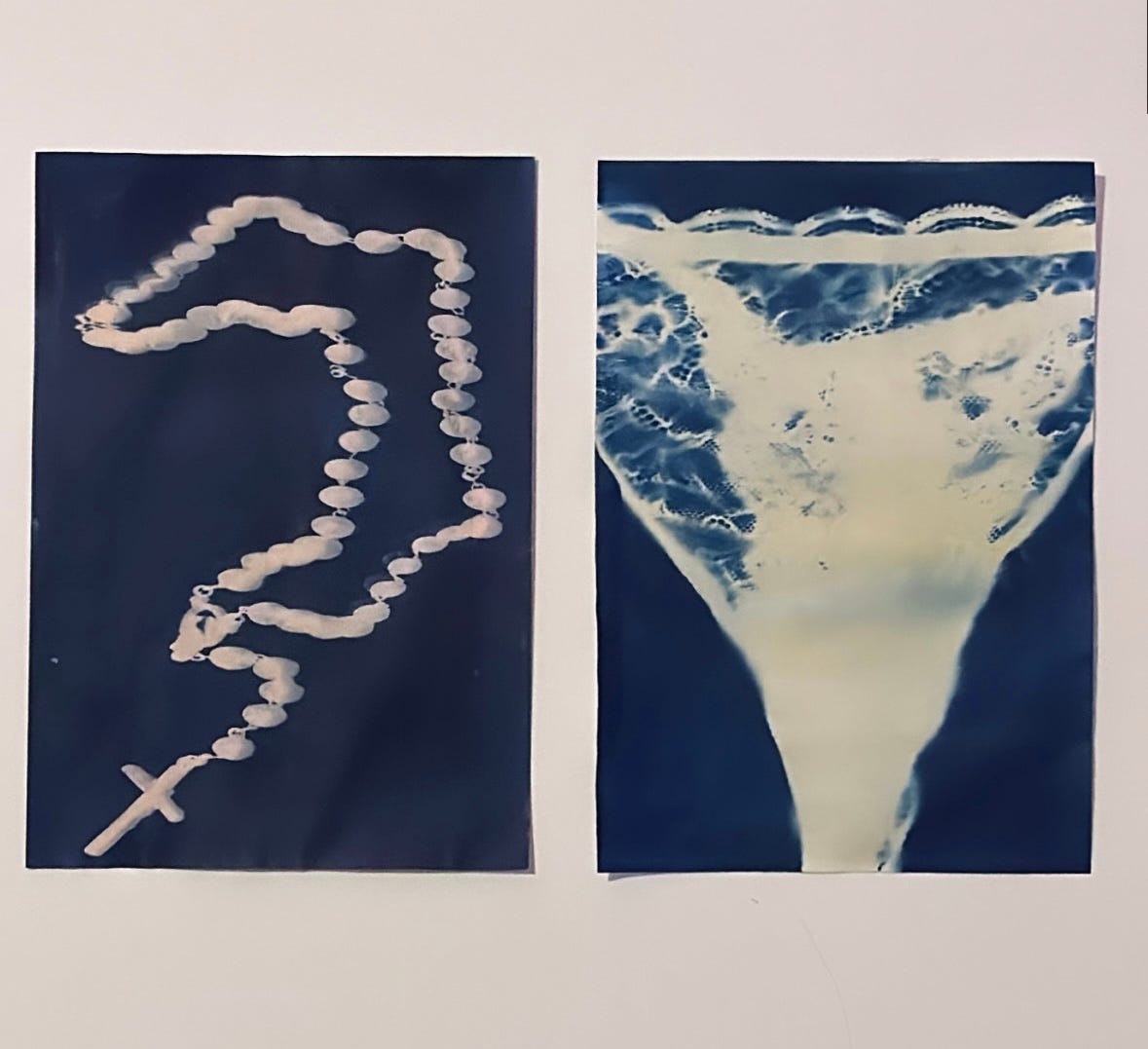
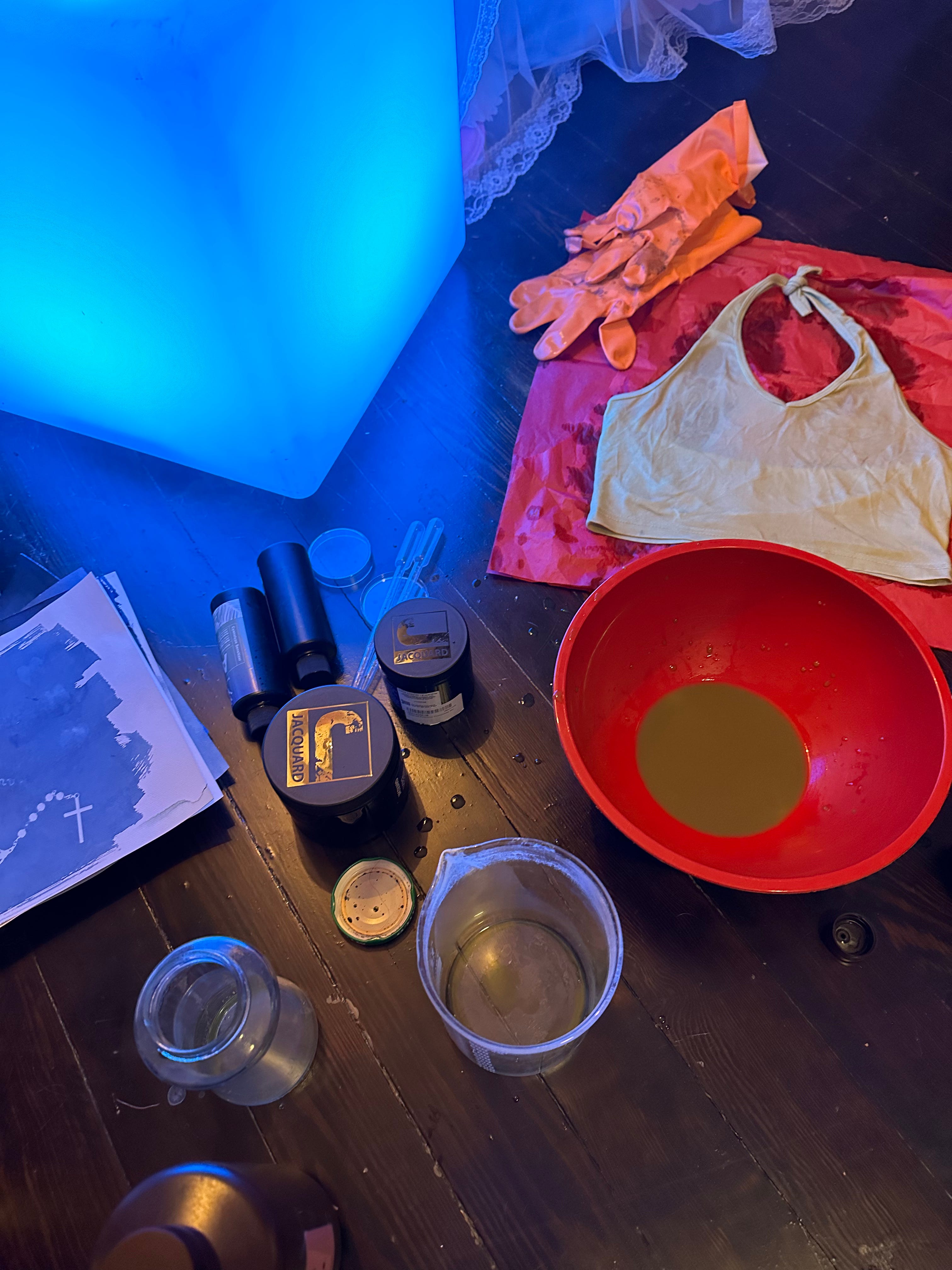
cyanotyping was a workaround for me. hindered by a lack of skills as an illustrator, I wanted to be able to apply images and text onto objects and fabric that I couldn’t draw myself. making them consumed me for months. it was all I thought about for a while. I made notes on the chemicals and how best to mix the solution. you need ferric ammonium citrate and potassium ferricyanide, in powder form, separately, and you need to add the right amount of water to each and then mix those two solutions together and then wait for it to sit over night in a cool, dry, dark place. so much about cyan-typing is just about having a cool, dry, dark place. (so much about living is just about having a cool, dry, dark place). I pre-acidified my papers and fabrics by soaking them in vinegar and letting them dry before applying the chemicals to them. I learned about other chemicals/agents that would help the process. hydrogen peroxide added in the rinsing stage helps to bring out the blue color more, white vinegar brightens the details, lemon juice helps balance hard water in the rinsing stage. the skin on my fingers was dry and cracked from handling active chemicals without gloves so often. I eventually got some gloves. I was doing a lot of the chemical mixing during the day time and leaving the papers out to dry in open rooms with the windows uncovered even though I had read you have to mix the solutions in the dark and coat the paper/wood/fabric you’re going to print on in the dark too. ignoring this step kept giving me shoddy results. it didnt feel bright but it took me a while to realize you can’t underestimate the light or the dark. even the tiniest bit will change things. you have to take the light seriously. have to take the dark seriously.
I dont have a dark room so I would just wait til nighttime to do it all.
you have to make sure you print it under the sun correctly. right time of day, right amount of time in the light so it doesn’t burn or fade out, winter prints are different than prints in spring/fall/summer etc.
what im trying to say is there are a lot of variables.
Keep reading with a 7-day free trial
Subscribe to silkw0rm_’s Substack to keep reading this post and get 7 days of free access to the full post archives.